Herzlich Willkommen beim Blog der Zephram GbR! Hier veröffentlichen wir regelmäßig Beiträge über Ideen und Innovation, die durch unsere Arbeit als Innovationsdienstleister inspiriert werden.
Unsere Kernkompetenz ist die Planung und Durchführung von Workshops für neue Produkte, Dienstleistungen und Geschäftsmodelle. Wir bieten auch Unterstützung beim Innovationsmanagement und Training in Ideenfindung und Ideenbewertung. Unsere Spezialität sind die Workshop-Drehbücher, die auf die Besonderheiten von jedem Auftrag genau zugeschnitten sind.
Nutzen Sie einfach die Kategorien in der Seitenleiste oder stöbern Sie in unseren Hauptbeiträgen:
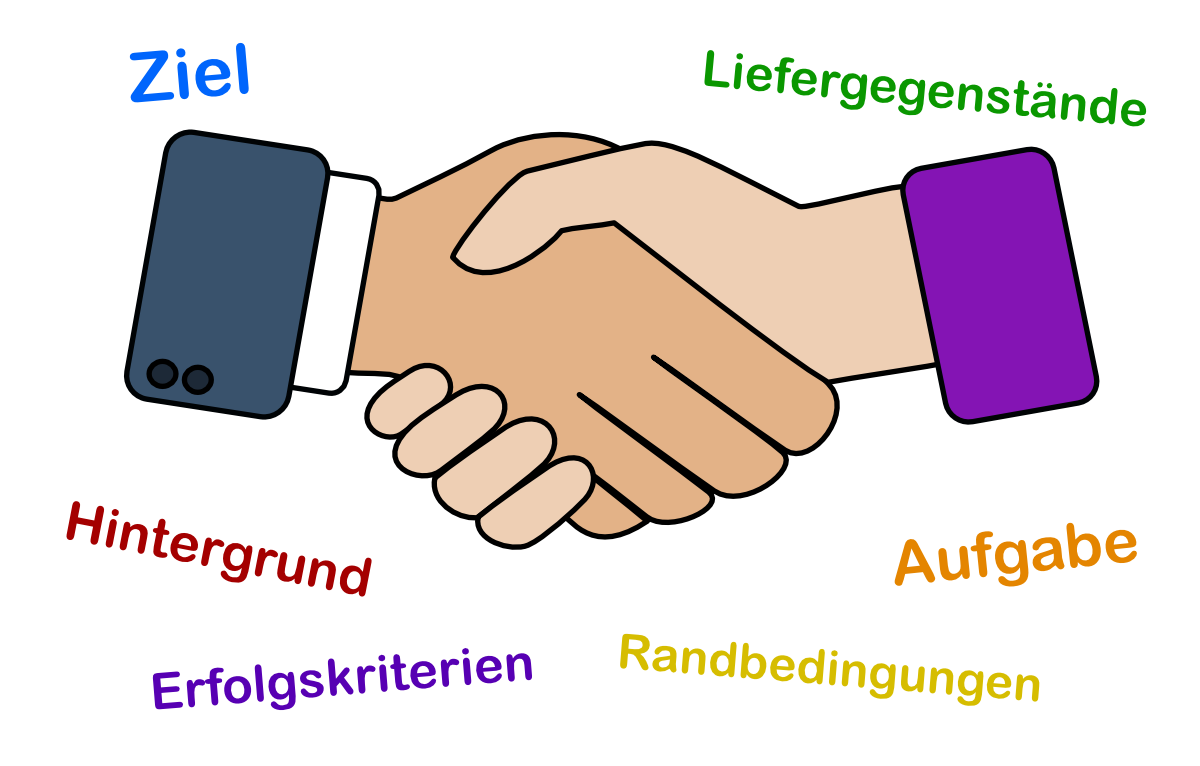
Der erste Schritt in unseren Projekten ist immer, den Workshop zu vereinbaren. Wir setzen uns mit unserem Auftraggeber in einem Briefing-Gespräch zusammen und legen fest, was der Workshop erreichen soll. Dieses Das Ergebnis des Briefing-Gesprächs nennen wir Briefing-Protokoll. Es ist für uns eine Art Lastenheft, und wir können erst anfangen, den Workshop vorzubereiten, wenn unser Auftraggeber es bestätigt hat.
Wozu den Workshop vereinbaren?
Das Briefing-Gespräch hat sowohl für uns als auch für unseren Auftraggeber ein wichtiges Ziel:
Wir können sicherstellen, dass wir unseren Auftraggeber verstanden haben.
Unser Auftraggeber erhält das Gefühl, dass er bei uns in guten Händen ist.
Das Briefing-Gespräch dauert typischerweise zwischen 60 und 90 Minuten. Es ist die erste Station in unserem Service Blueprint.
Das Briefing-Protokoll
Das Protokoll hat sechs Pflichtabschnitte. Jeder Abschnitt spielt für uns eine wichtige Rolle bei der Planung des Workshops.
Hintergrund
Der erste Abschnitt erklärt uns, in welcher Situation der Auftraggeber sich befindet und was ihn dazu veranlasst hat, einen Ideenworkshop zu bestellen.
Ziel
Hier ist das Ziel gemeint, das der Auftraggeber mit den Ideen verfolgt, zum Beispiel:
Wir wollen unseren Umsatz jedes Jahr um mindestens 10% steigern.
Wir wollen mit unserem Produkt X aus der Commodity-Falle entkommen.
Wir wollen in Zukunft neben unseren Produkten auch Dienstleistungen anbieten.
Aufgabe
Die Aufgabe, die durch den Workshop gelöst werden soll. Wir finden es hilfreich, die Aufgabe als Frage zu formulieren:
Wie könnte die nächste Generation unseres Produktes X aussehen?
Wie können wir den Prozess X effizienter durchführen?
Welchen Namen wollen wir unserem Institut geben?
Die Aufgabe ist die Überschrift über dem gesamten Workshop. Wir zitieren sie wörtlich in der Begrüßung, damit alle Teilnehmer wissen, worum es in den näcshten Paar Stunden geht.
Randbedingungen
Randbedingungen sind die Muss-Kriterien, die jede Idee erfüllen muss:
Die Idee muss mit vorhandenen Ressourcen zu verwirklichen sein.
Die (Produkt-) Idee muss sich an unsere bestehenden Kunden richten.
Die Idee muss zu unserer Unternehmensstrategie/zur Vorschrift XY kompatibel sein.
Im Workshop darf keine Rohidee weiterverarbeitet werden, die gegen eine Randbedingung verstößt.
Erfolgskriterien
Erfolgskriterien sind die Soll-Kriterien, die die Qualität einer Idee ausmachen. Die Erfolgskriterien entscheiden, welche Ideen am Ende zu den Siegern gehören. Typische Erfolgskriterien sind:
Je mehr Umsatz die (Produkt-) Idee für uns erzeugt, desto besser.
Je mehr die Idee zu unserer Position als Technologieführer im Markt beiträgt, desto besser.
Je mehr die Idee unsere Produktivität erhöht, desto besser.
Wir empfehlen, das Ziel als eines der Erfolgskriterien zu verwenden. Es hat sich bewährt, die Erfolgskriterien in der Form Je mehr … desto besser zu formulieren. Das verhindert auch eine Verwechslung mit den Randbedingungen.
Deliverables
Die Deliverables (Liefergegenstände) sind das, was wir am Ende des Projektes als Ergebnis an den Auftraggeber überreichen. Das ist typischerweise eine Microsoft Excel-Datei mit folgendem Inhalt:
Alle Rohideen, die im Workshop entstanden sind (und die Randbedingungen erfüllen)
Alle vertieften Ideen mit Bewertung
Eine Vergleich aller vertieften Ideen auf der Basis der Erfolgskriterien, zum Beispiel als Ranking oder als Kosten-Nutzen-Diagramm.
Wichtige Punkte, die in der Abschlussdiskussion zur Sprache kamen.
Ein Vorteil von Online-Workshops ist, dass das virtuelle Whiteboard, mit dem die Teilnehmer die ganze Zeit gearbeitet haben, zugleich die Dokumentation des Workshops ist. Wir lassen es nach dem Workshop solange online stehen, bis der Auftraggeber uns mitteilt, dass er es nicht mehr benötigt.
Unser Auftraggeber war ein Unternehmen, das chemische Produkte an einen führenden Hersteller von High-Tech-Produkten lieferte. Dieser Kunde stand unter Druck, den Lebenszyklus seines Hauptproduktes zu verkürzen, damit Nachfolgemodelle schneller auf den Markt kommen. Er hat deswegen Maßnahmen gesucht, die Zeiten für Forschung und Entwicklung, die oft mehrere Jahre dauerten, zu verkürzen. Das chemische Produkt unseres Auftraggebers spielte dabei eine zentrale Rolle, sodass beide Unternehmen in der F&E kooperieren mussten. Die Aufgabe bei diesem Workshop zur Produktentwicklung war also, Ideen für gemeinsame Forschungsprojekte zu entwickeln, um die technischen Herausforderungen der nächsten Produktversion schneller lösen zu können.
Der Workshop
Der Workshop dauerte 1,5 Tage und fand in einem Seminarhotel im Heimatland des High-Tech-Herstellers statt. Dieser schickte neun Ingenieure zum Workshop, und unser Auftraggeber war mit sechs Personen vertreten. Wir waren mit zwei Moderatoren dabei.
Am ersten Vormittag fand eine Einführung in die Aufgabe statt, und die Teilnehmer haben Maßnahmen zur Beschleunigung von Arbeitsprozessen gesichtet und diskutiert. Der ganze Nachmittag war der Ideenproduktion gewidmet. Am Abend standen 76 Ideen fest, die den Vorgaben unseres Auftraggebers entsprachen.
Der zweite Tag war der Ideenvertiefung und -bewertung gewidmet. Es gab zwei technische Kriterien und drei kaufmännische Kriterien. Zum Schluss gab es eine Gegenüberstellung und eine Priorisierung aller Favoriten.
Die Ergebnisse
Am Ende des Workshops standen 14 Ideen fest, die die vorgegebenen Kriterien erfüllten und das Potenzial hatten, die gesteckten Ziele zu erreichen. Die beiden Unternehmen nahmen sich vor, ihre Kooperation zu vertiefen, um schneller zu den benötigten Forschungsergebnissen zu gelangen.
Kommentar
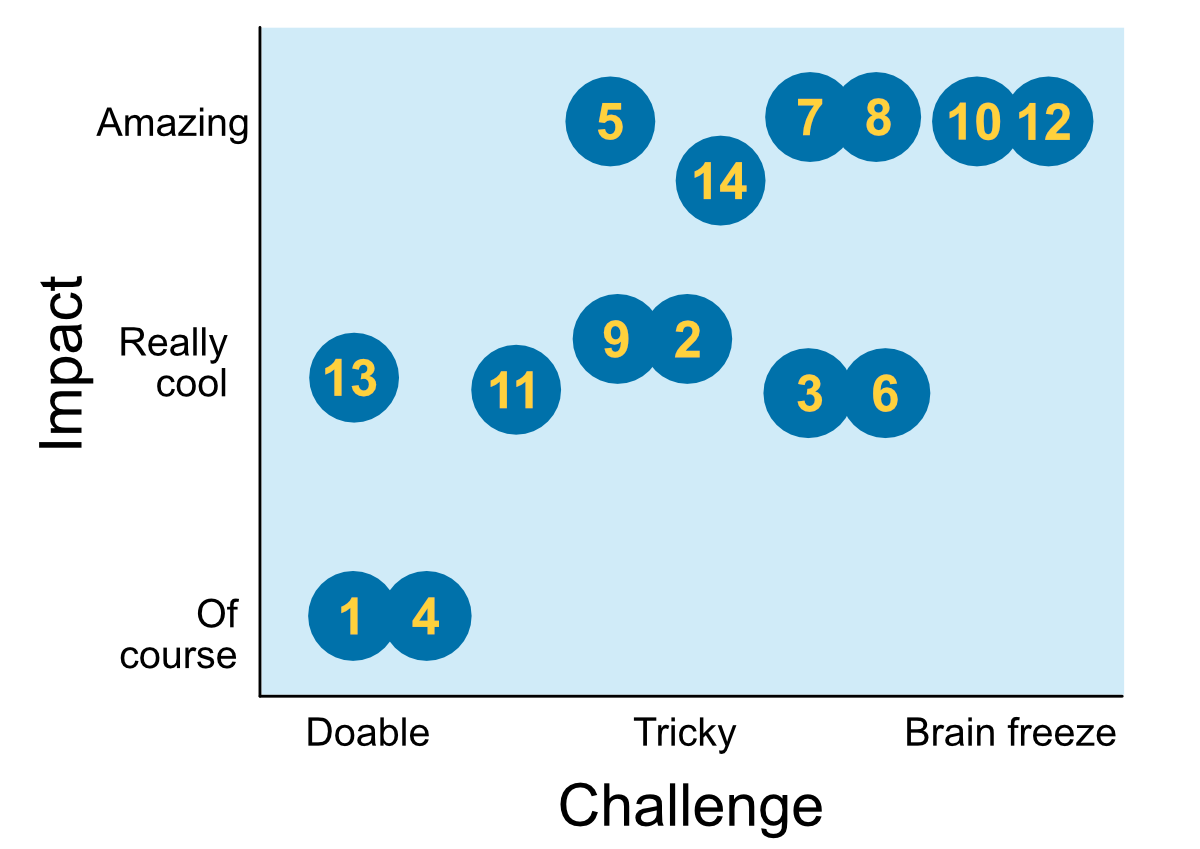
Am Ende des Workshops wollten wir einen Aufwand-Nutzen-Vergleich der Siegerideen durchführen. Die Teilnehmer hatten einen ausgeprägten Sinn für Humor und haben unseren Visualisierungsvorschlag modifiziert. Statt der üblichen Einteilung gering/mittel/hoch an beiden Diagrammachsen wollten sie machbar, knifflig und Hirnfrost an der Aufwandsachse sehen und na klar, voll cool und erstaunlich an der Nutzenachse. Die Teilnehmer haben sechs der 14 Ideen mit erstaunlich bewertet, was wir als Erfolg für diesen Workshop zur Produktentwicklung gewertet haben – auch wenn einige dieser Ideen versprachen, Hirnfrost bei den Entwicklungsingenieuren zu verursachen!
Mit dem Service Blueprint Workshop helfen wir einem Auftraggeber, der eine bestehende Dienstleistung aktualisieren will. Die Motivation dafür kann sein, die Wettbewerbsfähigkeit des Angebotes zu stärken und Alleinstellungsmerkmale zu entwickeln, oder die Zufriedenheit eines wichtigen Kunden auch in der Zukunft sicherzustellen.
Drei Phasen
Der Kern des Workshops hat drei Phasen. Für jede Phase werden im Idealfall bis zu zwei Stunden benötigt, sodass der Service Blueprint Workshop mindestens einen Tag dauern sollte.
Phase 1: Den Prozess zeichnen
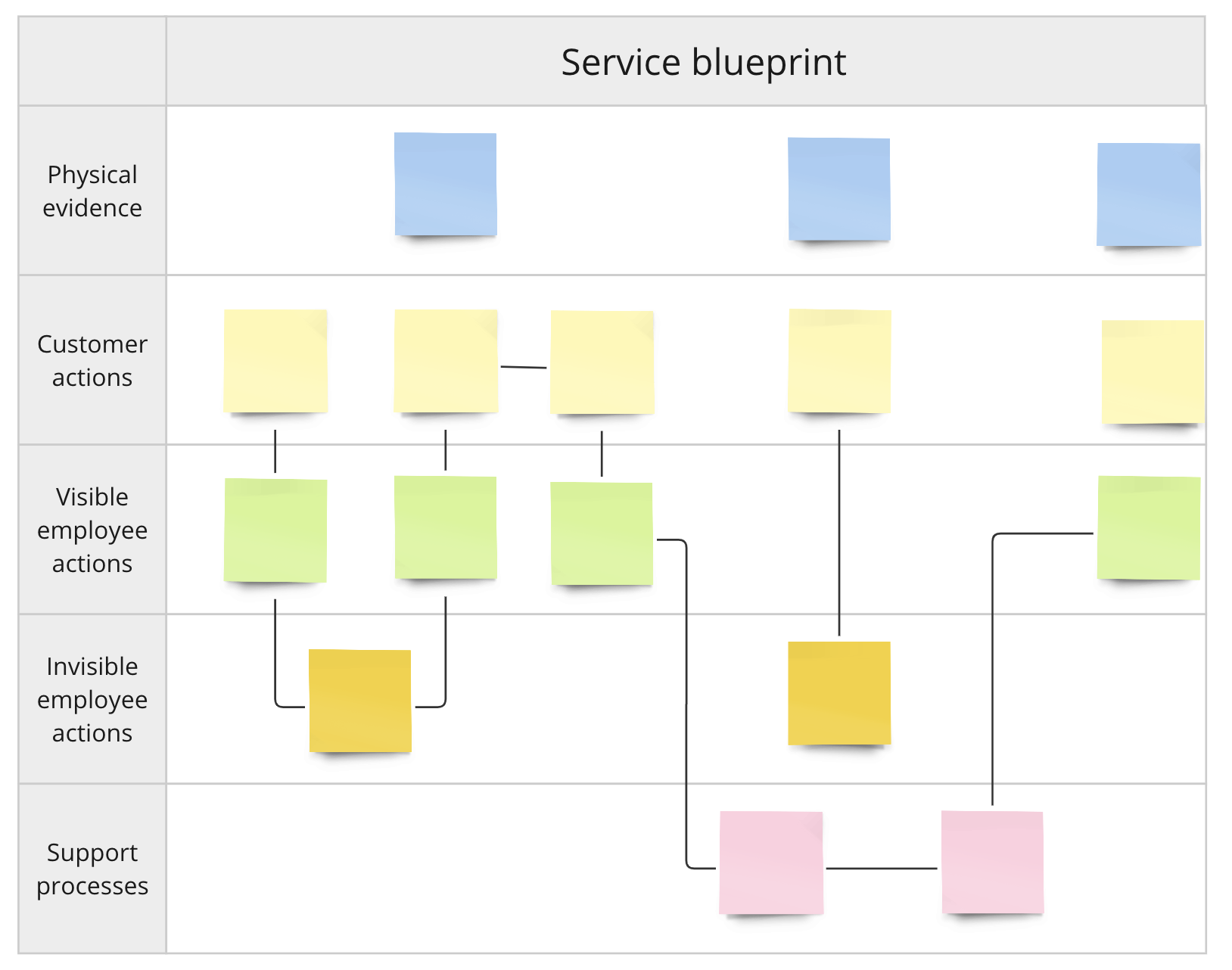
In der ersten Phase werden die Struktur und der Ablauf der Dienstleistung gezeichnet. Wir verwenden dafür das weit verbreitete Modell von Bitner, Ostrom und Morgan. Die Dienstleistung wird in fünf parallele Bahnen aufgeteilt. Jede Komponente der Dienstleistung wird an der richtigen Stelle im Ablauf eingetragen, und wichtige Beziehungen zwischen den Komponenten werden mit Verbindungslinien visualisiert. Wir haben eine Beispiel-Blaupause aufbereitet, der einen Eindruck davon vermittelt, wie das Ergebnis aussieht.
Phase 2: Fragen und Beobachtungen notieren
Die zweite Phase im Service Blueprint Workshop besteht darin, die Komponenten und ihre Wechselwirkungen zu analysieren. Zur Unterstützung geben wir den Teilnehmern eine lange Liste von Anregungen, zum Beispiel:
Was erwartet der Kunde an dieser Stelle?
Gibt es hier das Risiko eines Missverständnisses?
Was könnten wir an dieser Stelle tun, um den Kunden positiv zu überraschen?
Die Teilnehmer heften ihre Fragen und Kommentare, die durch diese Anregungen inspiriert werden, an die entsprechenden Stellen im Blueprint. Das Ergebnis ist ein großes, buntes Bild, das ein Meter hoch und einige Meter lang sein kann.
Phase 3: Lösungsansätze formulieren
In dieser Phase formulieren die Teilnehmer Lösungsansätze als Antworten auf die Fragen und Reaktionen auf die Beobachtungen. Diese Ideen können sehr vielfältig sein. Ein kleiner Vorschlag könnte beispielsweise sein, etwas mehr in eine bestimmte Interaktion mit Kunden zu investieren, weil sie eine gute Gelegenheit ist, einen positiven Eindruck zu machen. Ein großer Vorschlag könnte dagegen darin bestehen, weitere Aufgaben vom Kunden zu übernehmen, weil sie vom Dienstleister effizienter oder besser durchgeführt werden können, als vom Kunden selbst.
Projektbeispiel
Der Auftraggeber war ein Software-Hersteller mit mehr als Hundert Mitarbeitern. Dieser hatte einen sehr wichtigen Kunden, und er wollte sicherstellen, dass dieser Kunde mit der Qualität seiner Dienstleistung weiterhin zufrieden bleibt. Er hat mit uns einen Service Blueprint Workshop durchgeführt, um Ideen zur Verbesserung und Erweiterung seines Angebots zu gewinnen.
Der Workshop ging über einen Tag. Am Vormittag fand eine Diskussion über die einzelnen Stakeholders (IT-Manager und Entwicklungsleiter) beim Kunden statt, der Service Blueprint wurde vorgestellt, und die Ziele der Geschäftsleitung wurden präsentiert. Am Nachmittag wurde der Service Blueprint zunächst aufgezeichnet und anschließend analysiert. Zum Schluss des Workshops erfolgte eine Auswahl der attraktivsten Verbesserungsideen.
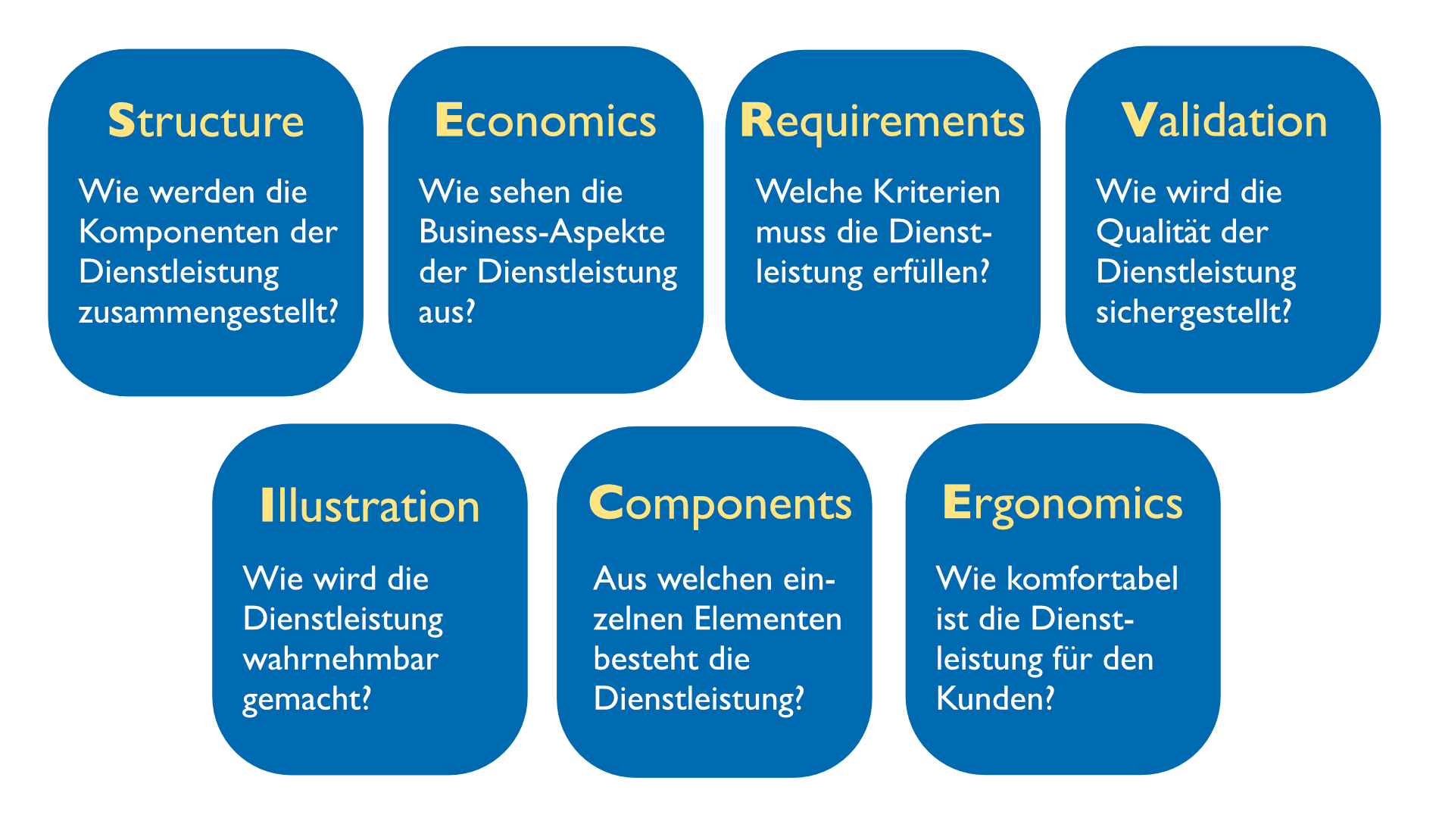
Wir haben den Workshop-Teilnehmern Anregungen für die Analyse des Service Blueprints zur Verfügung gestellt, die nach dem Akronym SERVICE organisiert waren:
Zu jeder Kategorie gehörten mehrere Anregungen, zum Beispiel:
Validation:Sollte der Kunde an dieser Stelle die Möglichkeit zu Feedback bekommen?
Requirements:Kennen wir die Kundenerwartungen an diesen Teil der Dienstleistung?
Economics:Ist diese Komponente für uns profitabel oder defizitär?
Ergonomics:Können wir diese Interaktion für den Kunden einfacher machen?
Der Service Blueprint ist eine Visualisierung einer Dienstleistung mit dem Ziel, sie zu optimieren und die Kundenzufriedenheit zu erhöhen.
Motivation
Dienstleistungen sind den selben Markteinflüssen ausgesetzt wie Produkte. Sie müssen wettbewerbsfähig bleiben, sonst droht ihnen der Abstieg in die Commodity-Falle. Aber anders als bei Produkten sind die Komponenten und Strukturen einer Dienstleistung wenig offensichtlich. Das kann zu Missverständnissen in der Diskussion über Innovation und Optimierung der Dienstleistung führen. Der Service Blueprint (etwa Blaupause einer Dienstleistung) ist ein beliebtes Werkzeug, das dieses Problem lösen kann.
Was ist ein Service Blueprint?
Kernelemente
Der Service Blueprint ist ein Werkzeug zur Visualisierung einer Dienstleistung mit dem Ziel, sie zu optimieren. Dabei wird die Dienstleistung in fünf Bereiche unterteilt, die als nebenläufige Prozesse gezeichnet werden. Die fünf Komponenten heißen:
Physical evidence: Materielle Objekte, die der Kunde im Laufe der Dienstleistung wahrnimmt.
Customer actions: Handlungen des Kunden.
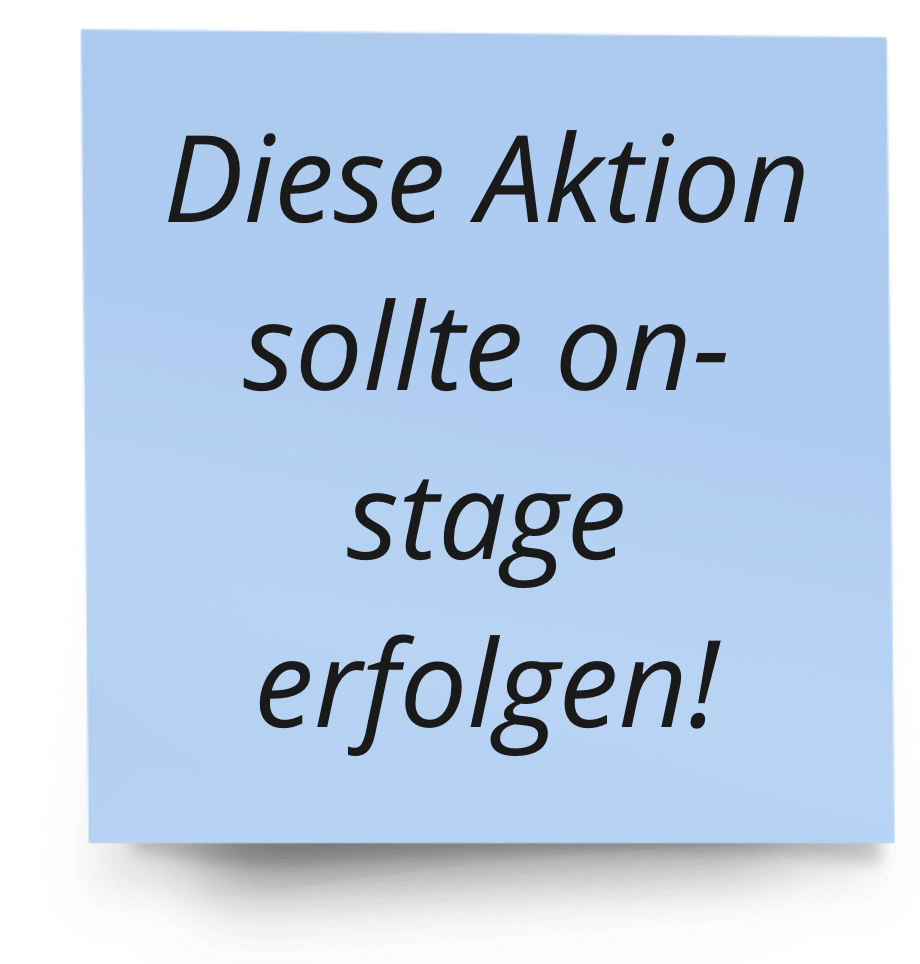
On-stage actions: Aktivitäten des Dienstleisters, die der Kunde miterlebt. Auch visible actions genannt.
Backstage actions: Aktivitäten des Dienstleisters, die der Kunde nicht miterlebt. Auch invisible actions genannt.
Support processes: Abläufe, die für die Ausführung der Dienstleistung erforderlich sind, aber nicht unmittelbar dazu gehören.
Alle Komponenten der Dienstleistung werden entsprechend ihrer zeitlichen Reihenfolge in die Blaupause eingetragen.
Mögliche zusätzliche Elemente
Je nach Anwendung können kann der Blueprint weitere Elemente enthalten:
Pfeile und Linien
Wechselwirkungen zwischen je zwei Komponenten werden mit Linien und Pfeilen dargestellt. Ein einfacher Pfeil bezeichnet eine unidirektionale Abhängigkeit wie eine zeitliche Reihenfolge. Eine Linie oder ein Doppelpfeil bezeichnet eine gegenseitige Abhängigkeit, zum Beispiel eine Vereinbarung zwischen Kunde und Dienstleister.
Vorschriften
Falls Gesetze oder interne Vorschriften für eine bestimmte Aktion gelten, kann eine entsprechende Notiz sicherstellen, dass sie bei der Überarbeitung der Aktion Beachtung finden.
Dauer
Manchmal ist es wichtig, die Dauer einer Aktion zu notieren. Das kann zum Beispiel die maximale Ausführungszeit einer Aktion sein, entweder um die Wartezeit eines Kunden zu begrenzen oder um die Kosten für die Ausführung einer Aktion zu beschränken.
Ziele
Viele Elemente in der Blaupause können mit einem Ziel versehen werden. Gegenüber dem Kunden kann das die gewünschte Wirkung sein (Zufriedenheit, Verstehen, Einverständnis, Begeisterung, …) Dieser Aspekt ist in Verbindung mit der Customer Journey Map ein zentrales Anliegen. Für die wirtschaftliche Optimierung der Dienstleistung kann das ein Kostenlimit für die Ausführung einer Aktion sein.
Die Vorteile des Service Blueprint
Der Service Blueprint ist ein sehr beliebtes Werkzeug. Dies liegt an seinen zahlreichen Vorteilen – sowohl in der Entwicklung neuer Dienstleistungen als auch in der Optimierung bestehender Dienstleistungen:
Überblick schaffen. Der Service Blueprint bietet einen umfassenden Überblick über eine Dienstleistung, der seine Ressourcen, Prozesse und Komponenten umfasst. Er ist leicht verständlich und eindeutig und bietet dadurch ein einheitliche Diskussionsgrundlage für alle Beteiligten.
Kundenperspektive verstehen. Der Service Blueprint hilft, die Dienstleistung durch die Augen der Kunden zu sehen und dadurch ihre Wünsche und Bedürfnisse besser zu verstehen. Erst dann kann das Unternehmen darauf reagieren und die erlebte Dienstleistung verbessern.
Schwächen identifizieren. Schwächen und Mängel in der Dienstleistung sind leichter zu erkennen. Dazu gehören das Risiko von Pannen und das Potenzial für unzureichende Kommunikation oder Enttäuschung seitens des Kunden.
Innovation ermöglichen. Der Service Blueprint bietet eine strukturierte Grundlage für Innovation. Jedes Element der Dienstleistung kann betrachtet werden – sowohl in seiner alleinstehenden Funktion als auch als Zahnrad in einer größeren Maschine.
Kultur festigen. Der Blueprint hilft, die Kundenorientierung in der Organisation zu etablieren. Das stärkt das Verständnis für Kundennutzen und verbessert die Kommunikation über die Dienstleistung.
Mitarbeiter unterstützen. Mitarbeiter gewinnen ein besseres Verständnis für ihre Rolle im gesamten Prozess und können neue Kollegen leichter einarbeiten.
Kollaboration fördern. Absprachen und Koordinierung zwischen verschiedenen Abteilungen profitieren von dem gemeinsamen Blick auf ihre Arbeit und ihre Ziele.
Effizienz verbessern. Der strukturierte Blick auf die Aktivitäten hilft, Kosten zu messen. Damit können die Dienstleistung besser bepreist und Gelegenheiten, Kosten zu reduzieren, identifiziert werden.
Management unterstützen. Der verbesserte Blick auf die Dienstleistung zeigt, welche Stellen die besondere Aufmerksamkeit des Managements benötigen, und er hilft, Prioritäten zu setzen, und Entscheidungen zu treffen.
Wettbewerb beobachten. Er ermöglicht einen Vergleich mit konkurrierenden Angeboten und hilft dadurch, die relativen Stärken und Schwächen zu identifizieren.
Beispiel: Unser Innovationsworkshop
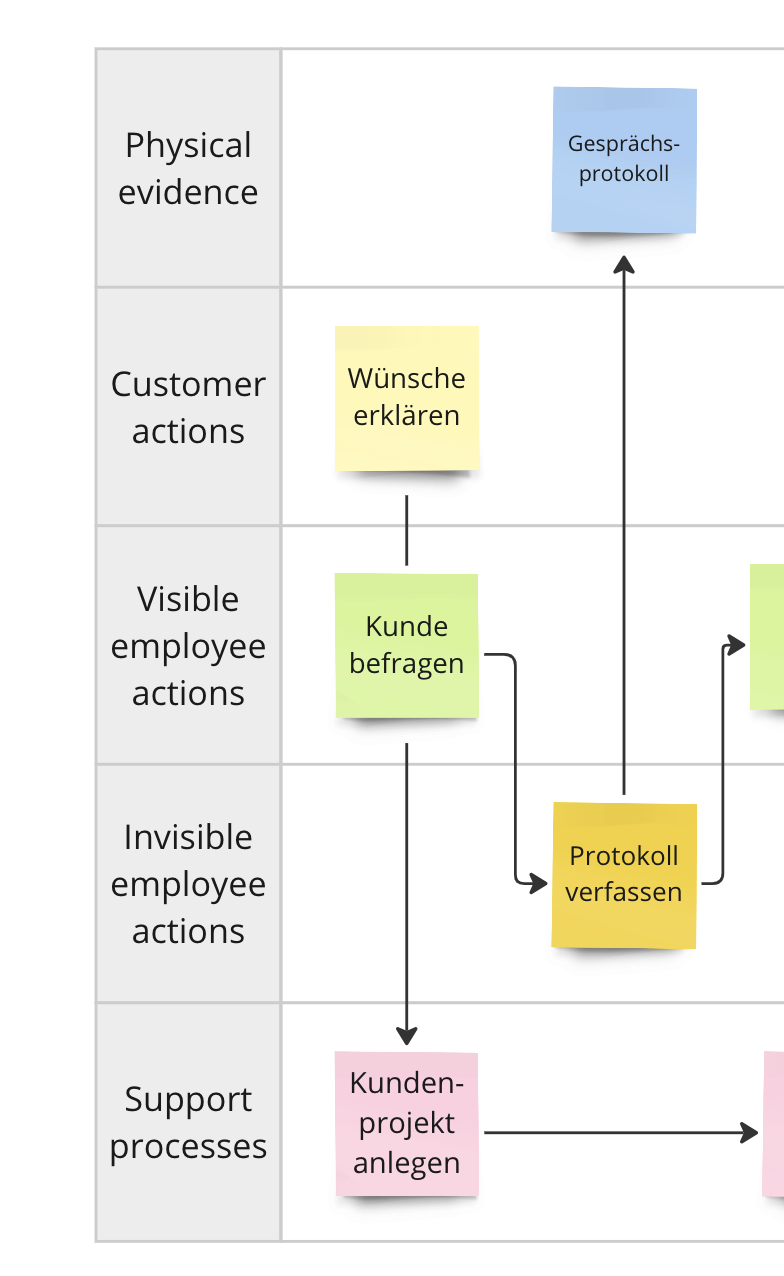
Die Grafik zeigt – etwas vereinfacht – einen Ausschnitt aus dem Service Blueprint für eine eigene Dienstleistung von uns: den Innovationsworkshop. Abgebildet sind die Schritte von der Vereinbarung des Auftrags bis zum Eintreffen im Workshop. Die Blaupause wurde mit dem virtuellen Whiteboard Miro erstellt.
Überblick über die Blaupause
Zur besseren Lesbarkeit haben wir jeder der fünf Spuren eine eigene Farbe gegeben. Die einzelnen Aktionen sind auf Haftzetteln geschrieben, und Abhängigkeiten zwischen den Aktionen sind mit schwarzen Verbindungslinien dargestellt.
Der Ablauf
Briefing. Die Dienstleistung beginnt mit einem Briefing-Meeting zwischen uns und unserem Auftraggeber. Wir verfassen im Support Process ein Briefing-Dokument, das unser Verständnis des Auftrags enthält. In einem kurzen Meeting mit dem Auftraggeber bitten wir um Bestätigung des Protokolls. Das konkrete Ergebnis ist das bestätigte Briefing-Dokument.
Hintergrund-Info. Im nächsten Schritt führen wir ein Interview mit dem Kunden durch. Hier geht es um Einzelheiten zum Auftrag. Bei einer Produktinnovation können das beispielsweise technische Details sein. Ganz typisch sind auch Informationen zum Markt und zur Konkurrenz. Diese dokumentieren wir als Hintergrundinformationen (Background info).
Workshop-Vorbereitung. Mit dem Briefing-Dokument und den Hintergrundinformationen können wir den Workshop vorbereiten. Dazu gehören das Drehbuch mit den Ideenfindungs- und Bewertungsmethoden. Meistens müssen wir auch Material einkaufen. In dieser Phase erfolgt die Koordinierung mit dem Workshop-Ort. Das ist normalerweise ein Hotel. Hier geht es um Dinge wie Räume, Ausstattung und Pausenverpflegung. Rechtzeitig vor dem Workshop-Termin versenden wir die Einladung zum Workshop an alle Teilnehmer.
Workshop-Beginn. Zum Workshop-Beginn begrüßen wir die Teilnehmer und statten sie mit einem Namensschild und einem Klemmbrett mit der Agenda aus.
Kommentare
Das Briefing-Dokument ist eine wichtiger physischer Beleg. Er zeigt unseren Auftraggeber, dass wir seine Situation und seine Ziele verstanden haben, und es enthält seine Qualitätsvorgaben für das Workshop-Ergebnis. Die Funktion des Dokumentes besteht darin, unserem Auftraggeber die Sicherheit zu vermitteln, dass das Projekt erfolgreich sein wird.
Die Zeit zwischen Auftragsvergabe und Workshop kann einige Monate betragen. Während dieser Zeit versenden wir eine Einladung, zusammen mit der geplanten Agenda und anderen Informationen über den Workshop. Die Funktion der Workshop-Einladung ist, während dieser langen Leerzeit ein Lebenszeichen von uns zu geben und dem Auftraggeber zu signalisieren, dass wir alles im Griff haben und dass er sich in guten Händen befindet.
Die Ankunft im Workshop ist ein wichtiger Touchpoint für unsere Dienstleistung, weil die Exponate im Raum (zum Beispiel große Suchfeldmatrizen an den Wänden oder ein Stapel Semantische Intuitionskarten auf jedem Tisch) zeigen, dass dieser Workshop auf ihre Aufgabe individuell zugeschnitten ist.
Optimierung des Service Blueprint
Die Blaupause erleichtert die Suche nach Verbesserungsmöglichkeiten. In unseren Service Blueprint Workshops erhalten die Teilnehmer eine Checkliste mit Fragen, die sie zu jeder Aktion im Blueprint stellen können. Hier sind ein paar Beispielfragen aus der Liste:
Was darf an dieser Stelle auf keinen Fall sein?
Was erwartet der Kunde an dieser Stelleund muss daher auf jeden Fall vorhanden sein?
Wie bewertet der Kunde hier unsere Qualität oder Leistung?
Wie könnten wir die Kunden an dieser Stelle positiv überraschen oder sogar begeistern?
Könnten wir hier etwas vereinfachen oder abschaffen, weil es dem Kunden egal ist?
Sollten wir hier Physical Evidence hinzufügen, um eine unsichtbare Aktivität zu dokumentieren?
Sollten wir diese unsichtbare Aktion sichtbar machen (oder umgekehrt)?
Wie könnten wir an dieser Stelle den Nutzen für den Kunden erhöhen?
Was könnte hier schiefgehen? Wie könnten wir das verhindern?
Wie können wir in diesem Moment sicherstellen, dass wir den Kunden richtig verstanden haben (oder er uns)?
(Fragen 1 bis 5 entsprechen den Kundenzufriedenheitsfaktoren im Kano-Modell.)
Blaupause und Checkliste sind die zentralen Werkzeuge im Workshop zur Verbesserung einer Dienstleistung. Sie haben die Vorteile, dass sie die Teilnehmer schnell verstehen und dass der Umgang mit ihnen Spaß macht und die Kreativität anregt.
Dienstleistungsinnovation bedeutet die Einführung einer neuen Dienstleistung oder die Aktualisierung einer bestehenden Dienstleistung. Aus der Sicht der Ideenfindung und Ideenbewertung entspricht sie in den meisten Aspekten der Innovation eines Produktes. Mit den Beiträgen in dieser Kategorie geben wir ein paar eigene Perspektiven auf das Thema Service Innovation.
Basis-Strategien
Wenn es darum geht, eine bestehende Dienstleistung zu aktualisieren, gibt es drei Basisstrategien, die wir Breite, Tiefe und Qualität nennen. Die Strategien sind unterschiedlich anspruchsvoll und haben unterschiedliche Auswirkungen; darum hängt die geeignetste Wahl stark von der konkreten Situation ab.
Es gibt vier Strategien zur Erhöhung der Wettbewerbsfähigkeit einer Dienstleistung. Sie schließen sich gegenseitig weitgehend aus, also muss der Dienstleister sich entscheiden, worauf er sich spezialisieren will.
Servitization
Servitization bezeichnet die Strategie, ein materielles Produkt teilweise oder vollständig durch eine Dienstleistung zu ersetzen. Dieser Ansatz ist nur in wenigen Situationen möglich, verspricht aber große Vorteile – sowohl für den Lieferanten als auch für den Kunden.
Servitization ist für uns eine spannende Strategie für die Dienstleistungsinnovation, und wir haben einige Beiträge dazu verfasst:
Es gibt einige Werkzeuge, um Gelegenheiten für neue Dienstleistungen zu entdecken. Sie betrachten die Ursachen und Gründe für B2B-Dienstleistungen aus unterschiedlichen Blickwinkeln. Daraus kann man leicht Fragen ableiten, die als Inspiration für die Ideenfindung dienen.
Warum wird eine B2B-Dienstleistung gekauft?
Die erste Perspektive für Gewinnung von Dienstleistungsideen bilden die Fünf Ansätze für B2B-Dienstleistungen. Sie können in der Vorbereitungsphase helfen, die grundsätzliche Suchrichtung für eine Dienstleistungsinnovation zu identifizieren.
Symptome für die Notwendigkeit einer Dienstleistung
Die zweite Perspektive sind 15 informelle Symptome, dass eine Dienstleistung attraktiv sein könnte. Die Symptome haben die Form von Beschwerden wie Das ist für uns schwer zugänglich! oder Wir kommen nicht weiter! Jede Beschwerde ist ein Hinweis, dass ein Spezialist möglicherweise Abhilfe schaffen könnte.
Optimierung einer bestehenden Dienstleistung
Die wichtigste Ideenfindungsmethode, um eine existierende Dienstleistung zu optimieren, ist die Service-Blaupause. Mit der Blaupause wird eine Dienstleistung aus verschiedenen Perspektiven betrachtet, und jede Perspektive wird in ihre Komponenten zerlegt und in einer Grafik dargestellt. Diese Visualisierung hilft, Ansätze für Verbesserungen zu erkennen. Wir haben einen Ausschnitt aus der Blaupause für unsere eigenen Innovationsworkshops als Beispiel genutzt.
Eine wichtige Komponente der Service-Blaupause sind die sogenannten Momente der Wahrheit. Dies sind bestimmte Ereignisse während des Verlaufs der Dienstleistung, die einen besonderen (positiven!) Eindruck beim Kunden hinterlassen.
Bei hartnäckigen Ideenfindungsaufgaben setzen wir die Provokationstechnik ein. Eine Situation ist hartnäckig, wenn sie durch viele Vorgaben bestimmt oder durch langjährige Praxis festgefahren ist. In solchen Fällen hilft die Methode, Annahmen aufzulösen, um den (Denk)weg für neue, ungewohnte Ansätze frei zu machen. In diesem Beispiel für die Provokationstechnik ging es um eine Anlage, deren Grundaufbau schon seit Jahrzehnten unverändert war.
Die Aufgabenstellung
Unser Auftraggeber war ein Konzern der Energiebranche. Er suchte Ideen für die Weiterentwicklung und Verbesserung eines Sicherheitselementes in der Stromversorgung. Die Ideen sollten im Idealfall zu patentierbaren Erfindungen führen, um die Produktverbesserungen vor Nachahmern zu schützen. Für den Invention on Demand Workshop stand ein Tag zur Verfügung.
Unsere Vorbereitungen
Ergiebige Provokationen setzen gute Kenntnisse der Aufgabenstellung voraus. Wir haben uns einen halben Tag lang mit einem leitenden Ingenieur zusammengesetzt, der uns den Aufbau und die Funktionsweise des Gerätes erklärt und technisches Informationsmaterial gegeben hat. Damit waren wir dazu in der Lage, Provokationen zu entwickeln, die verschiedenen technischen Einzelheiten geeignet widersprachen.
Beispiel-Provokationen
Wir haben die Provokationen als Was wäre, wenn… Fragen formuliert, damit sie unter den Ingenieuren gleich kreative Gespräche anregen. Wir präsentieren hier zehn Stück aus dem Workshop. Wir zeigen sie wegen Verständlichkeit und auch wegen Vertraulichkeit in abgewandelter Form.
Was wäre, wenn…
Dämpfer 4 auch die Arbeit von Dämpfer 5 übernehmen müsste?
Element 11 Element 4 nicht aktivieren würde?
wir nur eine Kurvenscheibe zur Verfügung hätten?
die Reaktionszeit des Gerätes halbiert werden müsste?
ein Maschinenelement Ihrer Wahl abgeschafft werden müsste?
das Element 7 ein nichtlineares Arbeitsprofil hätte?
die Kraftübertragung ohne Zwischenelement erfolgen müsste?
die Elemente 14 und 15 parallel statt orthogonal zueinander stehen würden?
wir das Zahnrad 2 durch eine Zahnstange ersetzen würden?
es Im Ausnahmefall X keinen Richtungswechsel geben dürfte?
Ergebnis der Technik war eine Reihe von Verbesserungsideen und -skizzen. Eine unserer Provokationen versprach sogar, ein altbekanntes Problem im Gerät zu beseitigen.
Kommentar
Wie bei allen anderen Ideenfindungsmethoden hängt die Wirksamkeit dieser Technik von der Intensität der Vorbereitung ab. Die zehn Beispielprovokationen waren nur möglich, weil wir uns mit der Funktionsweise des Gerätes vertraut gemacht haben. Die Methode erfordert eine hohe Denkleistung von den Teilnehmern, die man nicht mit wenig brauchbaren Provokationen verschwenden darf.
Die Bewertung von Ideen hat einige Tücken, und es ist für den Workshop-Moderator leicht, Fehler zu begehen, die das Ergebnis verfälschen. Wir haben sieben Regeln für die Ideenbewertung entwickelt, die wir in unseren Workshops immer einhalten um dieses Risiko zu verringern:
Die Voraussetzung für die Ideenbewertung sind die Ziele des Projektes. Ohne eine klare Vorstellung der Ziele im Workshop können viele unnötige Diskussionen entstehen. Werden beispielsweise Produkterweiterungen oder neue Produkte gesucht? Sind die gewünschten Innovationen eher inkrementell oder dürfen sie auch radikal sein? Sollen die neuen Produkte für den aktuellen Markt sein oder ist auch Diversifikation möglich?
In Phasen einteilen
Die Ideenbewertung sollte in mehreren Phasen ablaufen. Am Anfang sind die Bewertungskriterien eher allgemein, und mit zunehmender Verfeinerung werden sie zunehmend präziser. Eine Rohidee für ein neues Produkt beispielsweise muss nur einen erkennbaren Markt haben; dagegen muss die ausgearbeitete Idee am Ende des Prozesses vielleicht ein Marktpotenzial von mindestens 10 Millionen Euro im Jahr aufweisen.
(Die richtigen) Kriterien anwenden
Kriterien müssen präzise und eindeutig formuliert sein. Das Produkt spart seinem Nutzer Geld ist zu vage, um hilfreich zu sein. Dagegen ist Das Produkt spart seinem Nutzer mindestens 15 Arbeitsstunden im Monat ein Kriterium, das sich als Entscheidungsgrundlage eignet.
(Die richtige) Reihenfolge einhalten
Ideenverfeinerung kommt vor Ideenbewertung, und Ideenbewertung kommt vor Ideenauswahl. Es ist nicht möglich, eine Idee zu bewerten, die nicht ausführlich beschrieben ist, und es ist gefährlich, eine Idee auszuwählen (oder zu verwerfen), die nicht bewertet worden ist. Wenn diese Reihenfolge nicht eingehalten wird, ist ein Annahmefehler oder ein Ablehnungsfehler fast garantiert.
Effizient arbeiten
Natürlich sollte auch die Ideenbewertung so effizient sein wie möglich. Dieses Ziel führt zu zwei Gestaltungsprinzipien für einen Workshop (oder ein Reihe von Workshops):
Du darfst keine Idee darf teuer bearbeiten, die du billig hättest verwerfen können. Die Konsequenz aus diesem Prinzip ist, dass Ideen sehr früh anhand von Randbedingungen geprüft werden, um die unbrauchbaren unter ihnen schnell zu beseitigen.
Die Zeit, die du mit jeder Idee verbringst muss umgekehrt proportional seinzum Umfang der verbleibenden Ideenmenge. Solange viele Ideen noch im Spiel sind, darf jede Idee nur oberflächlich behandelt werden, damit später viel Zeit für die Auseinandersetzung mit den Siegerideen bleibt.
Äpfel und Birnen trennen
Manche Projektziele lassen unterschiedliche Arten von Idee zu, zum Beispiel sowohl Ideen für Produkterweiterungen als auch für neue Produkte. Ideen mit unterschiedlichem Charakter müssen aber unterschiedlich bewertet werden – man darf Äpfel und Birnen nicht vergleichen. Der Bewertungsprozess muss sie also trennen und jeweils geeignete Kriterien anwenden. Auf keinen Fall dürfen sie miteinander konkurrieren; der Workshop muss die besten Neuproduktideen und die besten Erweiterungsideen wählen.
Psychologie beachten
Es gibt ein paar psychologische Effekte, die die Ideenbewertung beeinflussen können. Dazu gehören Gruppendenken, Bewertungsbefürchtung und Trittbrettfahren. Der Workshop muss so geplant und moderiert werden, dass diese und andere negative Effekte nicht – oder möglichst selten – eintreten.
Fazit
Diese Regeln für die Ideenbewertung haben sich für uns bewährt; wir berücksichtigen sie bei der Planung und der Durchführung jedes Kundenprojektes .
During the COVID-19 pandemic, on-site workshops were not possible, and the online ideation workshop suddenly became popular. However, after the pandemic was over, online ideation workshops did not disappear, because they have several advantages over the traditional format.
Pros and cons of an online ideation workshop
The principal advantage of the online ideation workshop is savings in travel expenses. These can easily cost many thousands of Euros in hotel bills and air fares – let alone the loss in productivity owing to travel time. People can participate from the office, or even from home.
A second advantage is documentation; all contributions made during the workshop remain permanently available in digital form. This is particularly useful when the workshop is part of an innovation project, because the workshop results are needed in the next phase of the process. Miro can export the entire whiteboard in several different file formats.
Since the virtual whiteboard is infinitely large, the online workshop has no space restrictions that sometimes complicate an on-site workshop. For example, with clustering, the number and size of clusters can be modified in real time, and the Solution Space Matrix (Suchfeldmatrix) can be extended easily if participants suggest additional rows or columns.
From the moderator’s (i.e. our) point of view, the online ideation workshop has two distinct disadvantages compared to the on-site version. The first is that we cannot see what participants are actually doing, so we have no way to influence their behaviour. We have more than once entered a breakout room to find the team talking about football or some other topic that is not related to the task at hand. (This never happens in our on-site workshops!)
The second problem is that we cannot energize the participants when they are sitting at a desk in front of a computer. This is easy to do in in on-site workshop with games (Aufwärmspiele).
Software tools
Two pieces of technology are needed to carry out an online workshop. The first is a virtual whiteboard, which replaces all the physical material such as instructions, sheets of paper and forms. A carefully designed virtual whiteboard guides the participants and provides them with all the information they need. It also captures everything that they write down. We use the Miro software for our workshops.
The second piece of technology is the communication software. We prefer Zoom because it is easy to use and provides breakout rooms. These allow the participants to split into teams and work without being disturbed by the rest of the group. When the time is up, the moderator can return everyone to the group channel.
An example online template
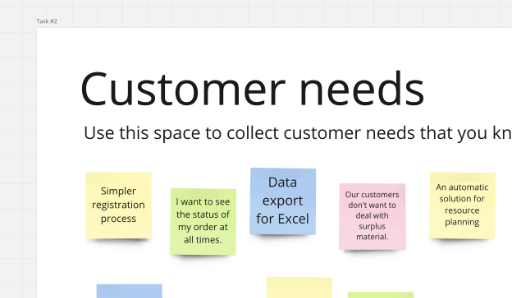
As an example, we have made one of our Miro templates public. We have chosen the Solution Space Matrix (Suchfeldmatrix), because it works very well in the online context. All participants can access it at the same time without getting in each others‘ way, which is hard to achieve with a physical pinboard. The template includes instructions for anyone who would like to make a copy and use it in their own workshops.
Im Internet findet man mehr als Hundert verschiedene Methoden zur Ideenfindung – die Webseite mycoted.com zeigt beispielsweise 192 verschiedene Kreativitätstechniken. In unseren Workshops bieten wir unseren Teilnehmern aber nur drei verschiedene Ansätze, um ihre Aufgabe zu lösen. In diesem Artikel beschreiben wir diese drei Ansätze zur Ideenfindung, und wir erklären, warum wir keine weiteren Methoden benötigen.
Warum wir Methoden zur Ideenfindung benötigen
Das Paradoxe an Ideen ist, dass sie vorher schwierig zu finden sind, aber hinterher offensichtlich zu sein scheinen. Es hat zum Beispiel bis 1987 gedauert, bis der Pilot Robert Plath auf den ’naheliegenden‘ Gedanken gekommen ist, einen Koffer mit Rädern und einer Teleskopstange auszustatten. Die Idee ist nützlich und verständlich; trotzdem hat es sehr lange gedauert, bis jemand darauf gekommen ist.
Methoden zur Ideenfindung existieren, um diese Blockade zu überwinden. Darum enthalten die besten Techniken einen Perspektivwechsel, der den Ideensuchenden auf einen anderen Gedanken lenkt. Die Blockade wird dadurch umgangen, und der neue Gedanke führt leichter zu einer Idee.
Drei Blockaden, drei Lösungsansätze
Nach mehr als fünfzehn Jahren in der Durchführung von Ideenworkshops haben wir erkannt, dass es drei Arten von Blockade im Kopf gibt, die das spontane Finden von Ideen verhindern. Wir brauchen also für jede dieser Blockaden einen Ansatz, um sie zu umgehen.
Fehlende Inspiration ⇒ Inspiration liefern
Die erste Blockade nennen wir fehlende Inspiration – man findet keine Konzepte im Kopf, die einen inspirieren. Dies ist die Blockade, die jeder häufig erlebt hat. Man kann sie auflösen, indem man sich Inspirationen besorgt. Im Titelbild ist das Symbol für diese Kategorie von Methoden zur Ideenfindung das Schmetterlingsnetz, mit dem man Inspirationen einfängt. In unseren Innovationsworkshops liefern wir Inspiration an die Teilnehmer mit der Analogietechnik und der Mr. X Technik.
Bei der Analogietechnik suchen wir Gegenstände oder Personen, die Eigenschaften mit der Aufgabenstellung gemeinsam haben. Diese Perspektivwechsel haben die größten Chancen, bei unseren Teilnehmern nützliche Ideen anzuregen. Die Vorbereitung setzt eine intensive Auseinandersetzung mit der Aufgabenstellung voraus. Für einen Auftraggeber aus der Investitionsgüterindustrie, der Dienstleistungsideen suchte, mussten wir zum Beispiel passende Vorbilder wie Rolls Royce recherchieren.
Der große Vorteil der Analogietechnik ist, dass wir sie an die Aufgabe anpassen können. Analogien können weit hergeholt sein oder dicht an der Aufgabenstellung liegen. Wir können sie als Bilder in einer Galerie aufhängen oder am Tisch auf Karten ausspielen wie im Kasino. Für einen Auftraggeber, der weiterführende Ideen für ein elektromechanisches Produkt suchte, haben wir während der Workshopvorbereitung diesen Kompositbogen als technische Analogie gefunden. Durch die Gemeinsamkeiten zwischen den beiden Geräten hat dieser Bogen den Ingenieuren geholfen, neue Features für ihr Produkt zu entdecken.
Betriebsblindheit ⇒ Annahmen aufheben
Die zweite Blockade ist die Betriebsblindheit: wenn man sich lang genug an eine bestimmte Sache gewöhnt, erkennt man nicht mehr die Möglichkeit, dass sie auch anders sein könnte. Damit ist es sehr schwierig, auf eine Idee zu kommen, die dieser bekannten Wirklichkeit widerspricht. Die Nähmaschine wurde erst möglich, als Balthasar Krems sich von dem gewohnten Bild der Nähnadel befreite und sich das Öhr am selben Ende der Nadel wie die Spitze vorstellte.
Die Betriebsblindheit kann man mit Hilfe der Provokationstechnik überwinden. Diese Methode zur Ideenfindung besteht aus zwei Schritten:
Man benennt offensichtliche und unumstrittene Beobachtungen über die vorliegende Situation. (Die Öse und die Spitze befinden sich an unterschiedlichen Enden der Nadel.)
Man verfälscht diese Beobachtungen mit dem Ziel, das Denken aus der gewohnten Bahn zu reißen. (Die Öse und die Spitze befinden sich am selben Ende der Nadel.)
Schritt 2 ist verhältnismäßig einfach. Dagegen fällt Schritt 1 gerade dem Experten oft schwer.
Wenn man auf diese Weise von der alten Denkweise kurzfristig befreit ist, ist der Weg frei, auf eine innovative Idee zu stoßen. Unser Symbol für die Provokation ist der Blitz.
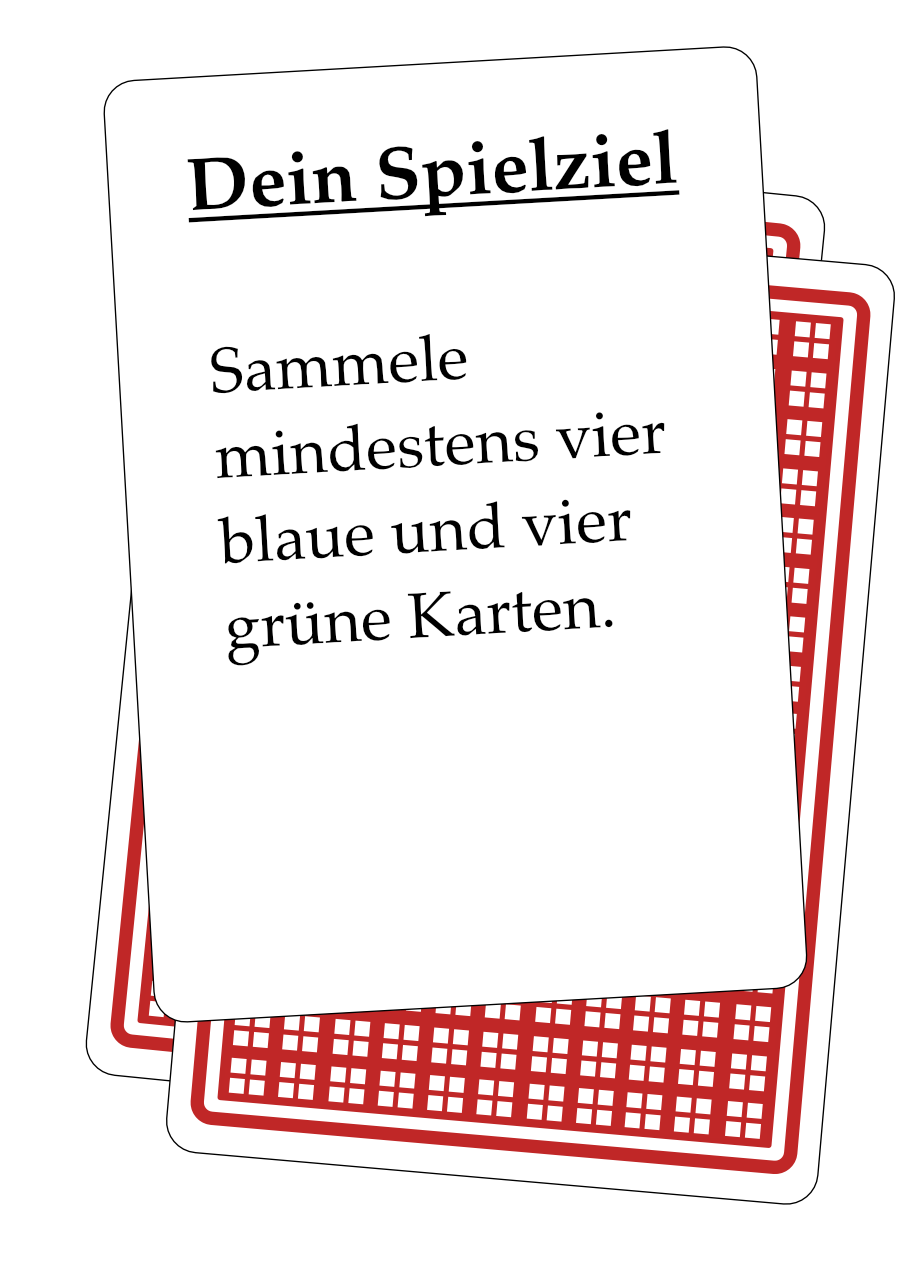
Eine gute Übung, um die Provokationstechnik kennenzulernen besteht darin, ein neuartiges Kartenspiel zu erfinden. Ein Beispiel für die zwei Schritte könnte dann sein:
Beobachtung: Die Spielregeln sind für alle Spieler gleich.
Verfälschung: Für jeden Spieler gelten andere Spielregeln.
Es fällt dann nicht mehr schwer, sich ein neuartiges Kartenspiel vorzustellen, bei dem die Spielregeln für jeden Spieler anders sind. Es könnten zum Beispiel individuelle Spielregeln unter den Karten vermischt sein. Wer eine solche Karte zieht, muss ab sofort die neue, persönliche Regel befolgen.
Schlummerndes Wissen ⇒ Situationsanalyse
Die dritte Blockade entsteht, weil man das eigene Wissen nicht sofort parat hat. Da sagt man sich, ich weiß nicht, was ich für einen Kuchen backen will, obwohl man genau weiß, welche Zutaten man gerade im Haus hat und welche Rezepte man kennt. Man weiß es eigentlich schon, aber es liegt nicht abrufbereit im Vordergrund des Bewusstseins. Dann braucht es eine sanfte Erinnerung, sich wieder bewusst zu werden, was man schon weiß.
Die dritte Kategorie von Methoden zur Ideenfindung ist also ein Ins-Bewusstsein-rufen der relevanten Aspekte der Situation. Für Teilnehmer ohne das entsprechende Hintergrundwissen ist die Methode eine Art fachliche Ausbildung. Unser Symbol für diese Analyse ist das Mikroskop.
Wir setzen die Situationsanalyse auf zwei Weisen ein: die Semantische Intuition und die Suchfeldmatrix. Beide Methoden betrachten die Ideenfindungsaufgabe aus zwei verschiedenen Blickwinkeln oder Dimensionen. Beide Dimensionen werden analysiert; das Ergebnis sind zwei Listen von Anregungen, die die Workshop-Teilnehmer beliebig kombinieren können.
Für die Aufgabe Was könnten wir dem Publikum beim nächsten Tag der offenen Tür unseres Opernhauses anbieten? könnten wir die zwei Dimensionen Was gibt es im Opernhaus? und Wann gelingt ein Familienausflug? wählen. Das könnte wiederum zur folgenden Analyse führen:
Familienausflug: Spaß haben, etwas Gemeinsames machen, etwas Neues ausprobieren, etwas Besonderes erleben, …
Bei der Suchfeldmatrix werden diese Anregungen in einer Matrix visualisiert, um alle Kombinationsmöglichkeiten sichtbar zu machen. Bei der Semantischen Intuition dagegen werden Wortschöpfungen wie Orchestererlebnis oder Kostümspaß gebildet. In beiden Fällen liefern die Kombinationen sofort Inspiration für den Tag der offenen Tür.
Was ist mit allen anderen Methoden?
Die große Zahl der weiteren Methoden täuscht, weil viele der Methoden im Kern gleich sind. Ob bei der Zufallstechnik die Anregungen aus einem Lexikon, einem Warenkatalog oder irgendeiner anderen Quelle stammen, ist vom Prinzip her egal. Das sind in unseren Augen nur Varianten derselben Methode.
Es gibt drei große Kategorien von Techniken, die für uns als Methode zur Ideenfindung nicht in Frage kommen – entweder weil sie zu wenig effektiv sind oder weil sie einem anderen Zweck dienen.
Die Methode bietet keinen Perspektivwechsel
Einige bekannte Methoden enthalten keinen Perspektivwechsel. Von den 101 Methoden in Arthur VanGundys Buch 101 Activities for Teaching Creativity and Problem Solving bieten sogar mehr als 50% keinen Perspektivwechsel. Zu dieser Kategorie gehören die 6-3-5-Methode, der Brainwriting Pool, die Galeriemethode und das klassische Brainstorming. Ohne Unterstützung durch einen Perspektivwechsel müssen die Workshop-Teilnehmer aus eigener Kraft auf neue Ideen kommen; angesichts der Denkblockaden ist es nicht verwunderlich, wenn diese Methoden oft wenig ergiebig sind. Die Zeitschrift brand einsberichtete einmal von einem Ideenworkshop, bei dem rund 1.500 Ideen erzeugt wurden, von denen aber nur eine oder zwei wirklich brauchbar waren.
Die meisten Ideenfindungsaufgaben, mit denen wir beauftragt werden, sind anspruchsvoll; es geht beispielsweise um neue Produkte für einen Automobilzulieferer oder die Optimierung einer technischen Dienstleistung im Flugzeugbau. Dafür reichen Techniken, die keine Perspektivwechsel bieten, nicht aus.
Der Perspektivwechsel ist wenig hilfreich
Einige Methoden zur Ideenfindung setzt zwar Perspektivwechsel ein, diese sind aber für anspruchsvolle Aufgaben zu allgemein oder zu wenig relevant. Zu dieser Kategorie gehören SCAMPER und die Osborn-Checkliste. Beispielsweise ist die Anweisung Verändere etwas! aus der SCAMPER-Liste zu vage, um hilfreich zu sein. Dagegen führt die Provokation Die Schaltfeder hat ein nichtlineares Arbeitsprofil bei einem Ingenieur, der sein Gerät gut kennt, möglicherweise zu einer interessanten Idee.
Auch die Zufallstechnik gehört zu dieser Kategorie. Sie verwendet zufällige Perspektivwechsel wie
Auch wenn solche Anregungen hin und wieder eine gute Idee inspirieren, ist die Trefferrate der Zufallstechnik (die bei weniger als 1% liegen kann!) für unsere Zwecke viel zu gering.
Die Methode macht eigentlich etwas anderes
Manche Techniken dienen einem anderen Zweck und zählen für uns nicht als Methoden zur Ideenfindung. Zum Beispiel hilft die Disney-Methode, eine bereits vorhandene Idee aus unterschiedlichen Blickwinkeln zu untersuchen. Die Sechs Hüte Methode von Edward de Bono ist ein beliebtes Werkzeug, das oft als Kreativitätstechnik zitiert wird. In Wirklichkeit aber ist sie eine Hilfe, um Diskussionen effektiver zu gestalten.
Bedeutung für die Praxis
Wenn wir einen Kundenworkshop vorbereiten, planen wir normalerweise alle drei Ansätze Inspiration liefern, Annahme aufheben und Situationsanalyse ein. Je mehr die Aufgabe durch Randbedingungen und technische Einzelheiten geprägt ist, desto größer wird der Anteil der Situationsanalyse.
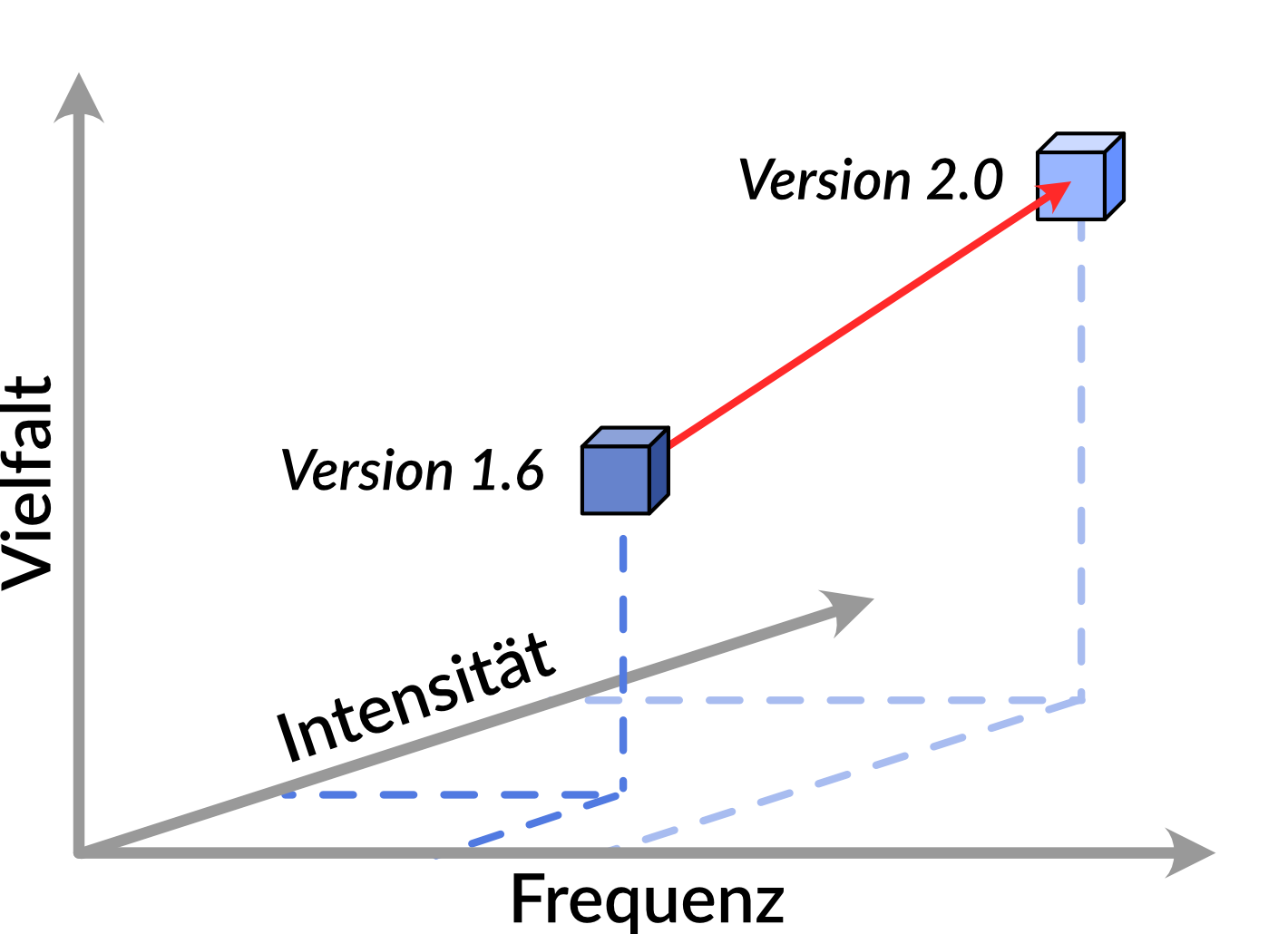
Viele Ansätze sind möglich bei der Suche nach Ideen für Produkterweiterungen oder -ergänzungen. Jeder dieser Ansätze gehört aber zu einer von drei Dimensionen, die wir Vielfalt, Intensität und Frequenz nennen. Diese Dimensionen beschreiben drei unterschiedliche Strategien, um ein existierendes Produkt zu aktualisieren oder auszubauen. Mit diesen Strategien können verschiedene Ziele verfolgt werden, zum Beispiel den Umsatz erhöhen, den Marktanteil verteidigen oder die Kundenloyalität stärken. Diese drei Dimensionen der Produktentwicklung helfen, die Ideenfindung zu strukturieren und Klarheit über das Ziel zu gewinnen.
Die Entstehung des Modells
Wir haben das Modell mit den drei Dimensionen entwickelt als Konsequenz der Nordsternmetrik. Die Nordsternmetrik wird von Startups in der Wachstumsphase als Ziel verwendet, nach dem sie ihre Wachstumsanstrengungen richten. Das Besondere an einer guten Nordsternmetrik ist, dass sie den gesamten Kundennutzen schätzt, der von einem Produkt geleistet wird. Wenn der Wert der Nordsternmetrik steigt, steigen automatisch die üblichen Wachstumskennzahlen wie der Umsatz mit.
Man kann auf drei verschiedene Weise den Gesamtnutzen eines Produktes erhöhen:
Die Anzahl der Nutzer wächst.
Der Hauptnutzen des Produktes wird gesteigert.
Das Produkt bietet zusätzliche Arten von Nutzen.
Das Modell für die Produktentwicklung spiegelt diese drei Varianten wieder.
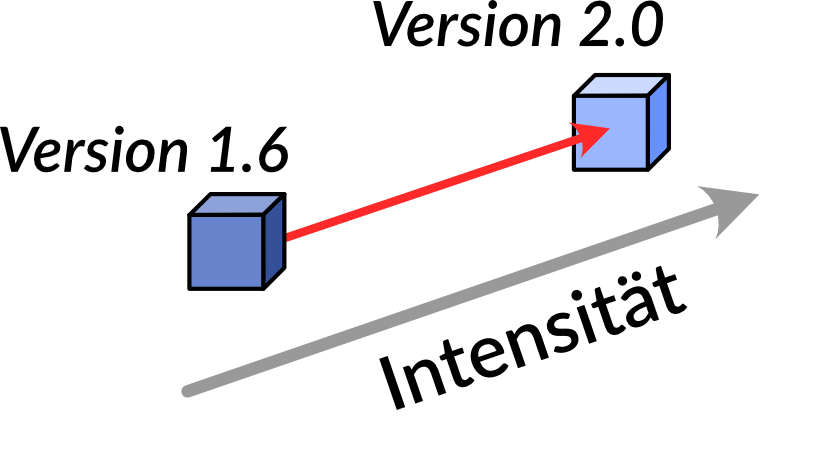
Die Intensität erhöhen
Die erste Dimension der Produktentwicklung beschreibt die Steigerung der Intensität einer bestehenden Eigenschaft des Produktes. Die Konkurrenzfähigkeit des Produktes wird gestärkt, indem es ‚mehr von selben‘ leistet:
Die Batterie hat jetzt 1.400 MWh Energie statt zuvor 1.200 MWh.
Die Zeitspar-App spart seinem Nutzer im Mittel jetzt 1,5 Stunden am Tag statt zuvor 1,2 Stunden am Tag.
Der neue Mikroprozessor hat eine Taktfrequenz von 2.5 GHz statt zuvor 2.3 GHz.
Für etablierte Produkte bedient diese Strategie den Quadranten Produktentwicklung in der Ansoff-Matrix, das heißt, Marktanteile im bestehenden Markt zu halten oder auszubauen. Sie . Sie ist die naheliegende Art von Produktentwicklung, die selten eine Ideenfindung benötigt, weil es allen Beteiligten klar ist, welche Attribute von Interesse sind. Es wird aber mit der Zeit zunehmend schwierig, die Leistung noch weiter zu erhöhen. Außerdem kann es Marktsegmente geben, die die gestiegene Leistung nicht benötigen und daher nicht bereit sind, einen erhöhten Kaufpreis zu bezahlen.
Für Startups bedeutet die Dimension Intensität, dass sie ein neues Produkt entwickeln müssen, das eine deutlich höhere Leistung in einer bekannten Dimension bietet, als das, was bisher am Markt erhältlich war. Das ist eine schwierige Aufgabe, und sie wird nur selten von Startups praktiziert.
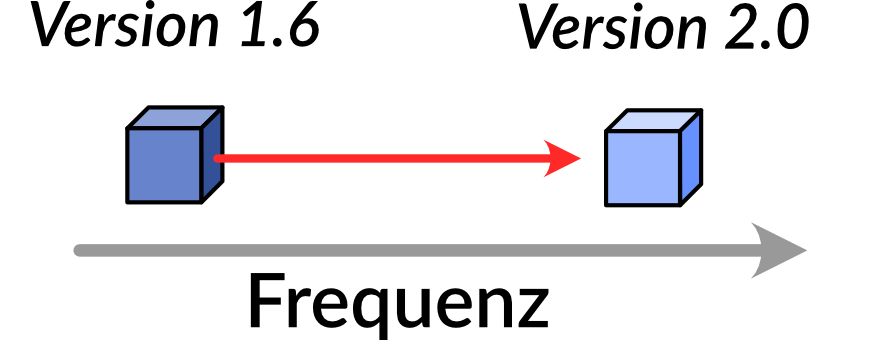
Die Frequenz erhöhen
Bei dieser Dimension geht es darum, die Frequenz der Nutzung des Produktes zu erhöhen. Dies hat eine offensichtliche und eine weniger offensichtliche Seite.
Die offensichtliche Seite der Dimension entspricht dem üblichen Verständnis von Wachstum: die Akquise neuer Kunden. Wenn diese sich in neuen Märkten befinden, spricht die Unternehmensberatung McKinsey von Adjacencies. Das Produkt wird angepasst, um den Bedürfnissen und Umständen dieser neuen Segmente zu entsprechen. Das kann bedeuten…
Die Anpassung an die Sprache oder die Bräuche einer bestimmten geografischen Region
Die Entwicklung von Varianten für unterschiedliche Anforderungsprofile
Die Entwicklung von Features, die spezifische Nutzergruppen benötigen.
Auch in diesem Fall ist das Bedürfnis nach Ideenfindung eher gering, weil die Marketing-Abteilung die Bedürfnisse der anvisierten Zielgruppen ermittelt.
Die weniger offensichtliche Seite dieser Dimension bedeutet, die Nutzungshäufigkeit oder -dauer des Produktes bei bestehenden Kunden zu erhöhen. Je mehr ein Kunde das Produkt einsetzt, desto mehr Nutzen erhält er. Dieser Ansatz befindet sich im Quadranten Marktdurchdringung der Ansoff-Matrix. Das stärkt die Kundenbindung, was in manchen Branchen ein wichtiger Faktor ist. Wenn das Produkt mit einem Pay-per-use Bezahlmodell angeboten wird, trägt diese Strategie auch zum Umsatzwachstum mit. Dies ist ein starkes Argument für dieses Bezahlmodell, und es ist kein Zufall, dass es von vielen Startups gewählt wird. Für ein etabliertes Unternehmen kann das ein Wechsel des Geschäftsmodells bedeuten, was aber sowohl für den Kunden als auch für den Lieferanten große Vorteile mit sich bringen kann. Zwei berühmte Beispiele für diese Strategie sind der 914 Fotokopierer von Xerox und Power by the Hour von Rolls Royce.
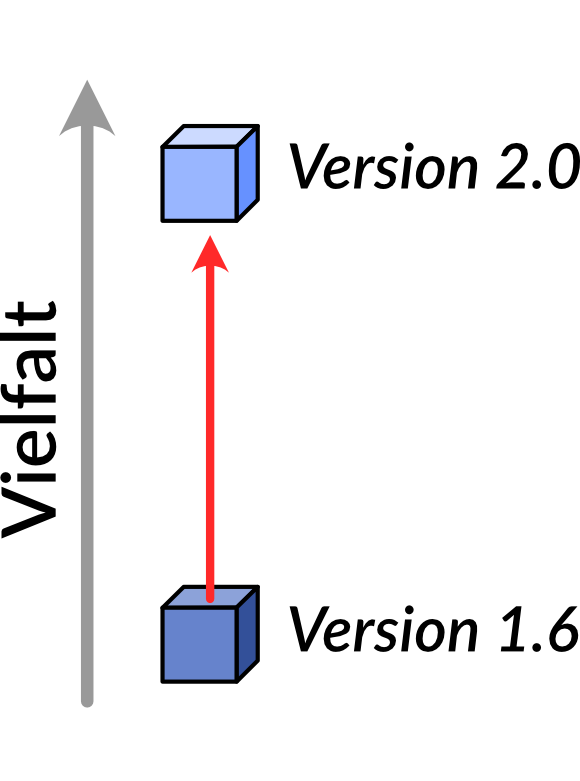
Die Vielfalt erhöhen
Bei der dritten Dimension des Modells geht es darum, dass ein Produkt neue Arten von Kundennutzen anbietet. Es wird dadurch attraktiver und dadurch auch konkurrenzfähiger im bisherigen Markt. Die neuen Features können aber auch den Eintritt in neue Märkte ermöglichen.
Der neue Kopfhörer hat eine Geräuschunterdrückung hinzubekommen.
Der neue Joghurt enthält auch Vitamine.
Die neuen Müllsäcke haben zusätzlich eine antibakterielle Funktion.
Die neuen Bratwürste sind jetzt vegetarisch.
Dies ist auch der Ansatz, der von Startups am häufigsten gewählt wird. Sie erfinden Produkte, die neben der erwarteten Leistung existierender Angebote neue Arten von Kundennutzen bieten, die am Markt bisher nicht erhältlich waren. Ein Beispiel dafür ist das Startup Uber, dessen Produkt neben der Möglichkeit, eine Fahrt zu buchen zusätzlich ein hohes Maß an Einfachheit und Transparenz bietet.
Diese Dimension bietet die meisten Gelegenheiten für Kreativität und Innovation, und ist auch bei uns die am häufigsten gebuchte Art von Kundenprojekt. In gesättigten Märkten sind sich alle Angebote ähnlich, und es gibt kaum noch Möglichkeiten für die Leistungserhöhung im üblichen Sinn. In diesem Fall bietet diese Dimension die einzige Möglichkeit, Alleinstellungsmerkmale zu entwickeln.
Ein Praxistipp für den Innovationsmanager
Stellen Sie eine Liste erfolgreicher Produkte zusammen. Diese Produkte sollen nicht aus der eigenen, sondern aus anderen, möglichst weit entfernten Branchen kommen. Zu jedem Produkt gibt es eine Liste der besonderen Merkmale, die zu seinem Erfolg beigetragen haben. Wir haben eine Liste von 20 Eigenschaften des Spielzeugs Lego als Beispiel erstellt. Diese Ressource ist sehr hilfreich bei der Ideensuche in der Dimension Vielfalt. Sie kann in einem Innovationsworkshop zu vielen Inspirationen führen, auf die Sie und Ihre Kollegen vielleicht sonst nicht so schnell gekommen wären.
Lieber Besucher, wir benutzen Cookies, um für Sie das beste Erlebnis auf unseren Seiten zu ermöglichen. Wir nehmen an, dass Sie damit einverstanden sind, wenn Sie weiter auf unseren Seiten surfen. Viel Erfolg!Ok